Positive-Reinforcement Training for a Newly Adopted Bird: A Toronto Guide
A newly adopted bird doesn’t need to perform tricks to benefit from training. A few calm, reward-based lessons can help them feel safer, make everyday care easier, and give you a shared way to communicate. In a Toronto home, that might mean stepping onto a perch, returning to the cage, or calmly accepting a carrier when it’s time for a vet visit.
Start with trust, not demands
A rescued bird may have had different experiences with people, hands, and handling. Give them time to settle, and let them choose how close to come. Training should never mean chasing, grabbing, scolding, or withholding food. Those approaches can frighten a bird and make cooperation less likely.
Begin by observing what your bird already enjoys. It might be a small piece of a favourite food, a particular toy, or simply a little attention. Keep treats tiny so they remain rewards rather than a meal. If you’re unsure what foods are safe for your bird, ask an avian veterinarian before experimenting.
Work in a quiet, familiar spot, away from household commotion. Toronto apartments can be busy places, so choose a time when the vacuum, cooking, and visitors aren’t competing for your bird’s attention. Keep sessions short, and stop while things are still going well.
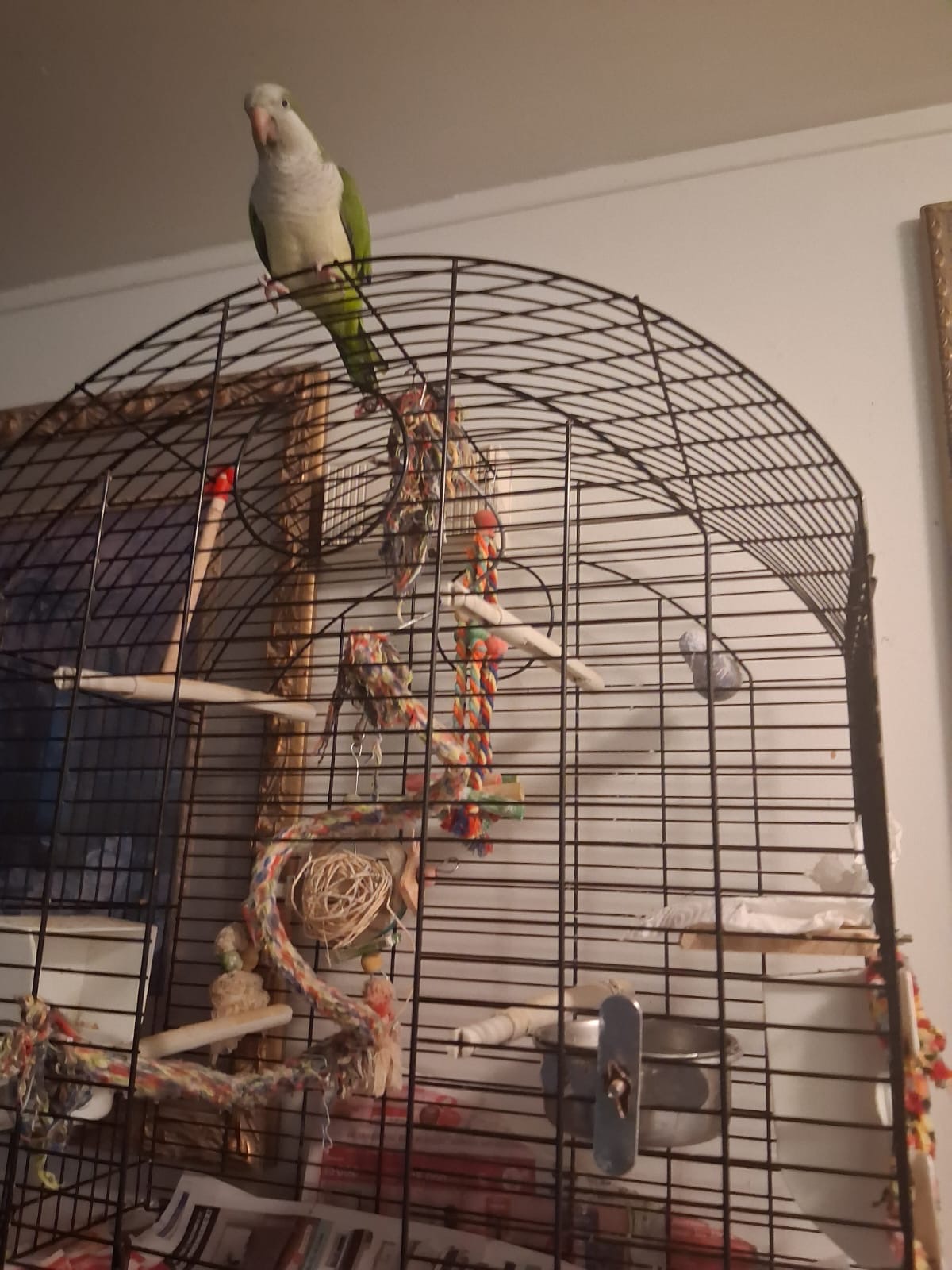
Angel, a Quaker parrot. Let your bird set the pace as you build a positive training routine.
Mark the behaviour you want
Positive reinforcement means rewarding a behaviour you’d like to see again. A simple marker—a brief word such as “yes,” spoken in the same cheerful tone—can help your bird understand which action earned the reward. Say the marker as the behaviour happens, then offer the treat promptly.
Start by rewarding something easy, such as looking toward you or calmly approaching the front of the cage. If your bird seems unsure, make the goal smaller: reward them for staying relaxed while you sit nearby. Progress is not a race. A bird that chooses to remain comfortable around you is learning something valuable.
Watch body language closely. Leaning away, freezing, open-beak warnings, or frantic movement may mean the session is too intense. Give your bird space and try again later with an easier step. If you’re uncertain whether a behaviour is fear, discomfort, or something else, an avian vet or qualified bird behaviour professional can help.
Teach a simple “step up” safely
A reliable step-up cue can make routine care and movement around the home easier, but it should be taught without forcing contact. First, reward your bird for calmly approaching a handheld perch or your hand, depending on what they’re comfortable with. Keep your hand still and give them the option to move away.
When they voluntarily place one foot on the perch or hand, mark the moment and reward. Build gradually: one foot, then two, then a brief step onto the perch. Pair the action with a consistent cue only after your bird is beginning to understand the movement. If they hesitate, don’t push your hand into their chest or corner them. Return to an easier step and let them choose.
Some birds may never enjoy hands-on interaction, and that’s okay. A handheld perch can be a useful alternative, especially for moving a bird that is nervous about hands. The goal is safe cooperation, not proving that your bird will tolerate anything.
Make practical skills part of daily life
Training can help with ordinary routines. You can reward your bird for entering the cage, touching a target such as the end of a stick, or calmly approaching a carrier. These skills are especially helpful when a bird needs to travel across the GTA for an avian-vet appointment.
For carrier practice, leave the carrier open in a safe area and let your bird investigate it on their own. Reward looking at it or moving closer before asking for more. Later, reward stepping inside, then staying briefly, and eventually closing the door for a moment. Build each stage gradually; don’t turn a training session into a surprise trip.
Keep training separate from urgent handling. If your bird is injured or showing signs of serious illness, contact an avian veterinarian rather than trying to train through the problem. Training is for building skills over time, not delaying care.
Keep a simple routine and celebrate small wins
A predictable practice time can help you notice what your bird is ready to learn. A few minutes is often enough. End on a successful, easy behaviour, and leave your bird with access to their usual food, water, rest, and enrichment. Avoid training when they’re tired, frightened, or focused on something else.
Different species and individual birds vary in confidence and motivation. If you’re still choosing a companion, browse our [species guides](/species) to learn about different birds’ needs and temperaments. If you’re ready to meet birds seeking homes, you can [browse adoptable birds](/) or join the [adoption waitlist](/waitlist).
With patience, training becomes less about commands and more about clear communication. Let your bird’s comfort guide the pace, reward the choices you want to encourage, and treat every small sign of trust as progress. When you’re ready to take the next step, explore Bird Sitting Toronto’s Rehoming Portal.
Ready to welcome a feathered friend?
Browse birds currently available for adoption through BST.
Browse Available BirdsRelated Articles
Can You Keep a Pet Bird in a Toronto Condo? What to Check Before Adopting
Planning to adopt a bird in a Toronto condo? Check condo bylaws, rental rules, noise expectations, and safe space before bringing a bird home.
Nov 16, 2026
Questions to Ask Before Adopting a Bird in Toronto
Adopting a bird in Toronto? Ask about health, diet, behaviour, routines, and rehoming history to find a companion who fits your home.
Nov 9, 2026